
Sep 25
/
Amy Parkinson
World Congress of Biomechanics 2026: A few things we took away
Five days, plenty to think about
In July, MyoLearn travelled to Vancouver for the 10th World Congress of Biomechanics (WCB). Bringing together researchers, educators, students and industry from across the world, five days of conversations, demonstrations and new perspectives offered plenty to think about.
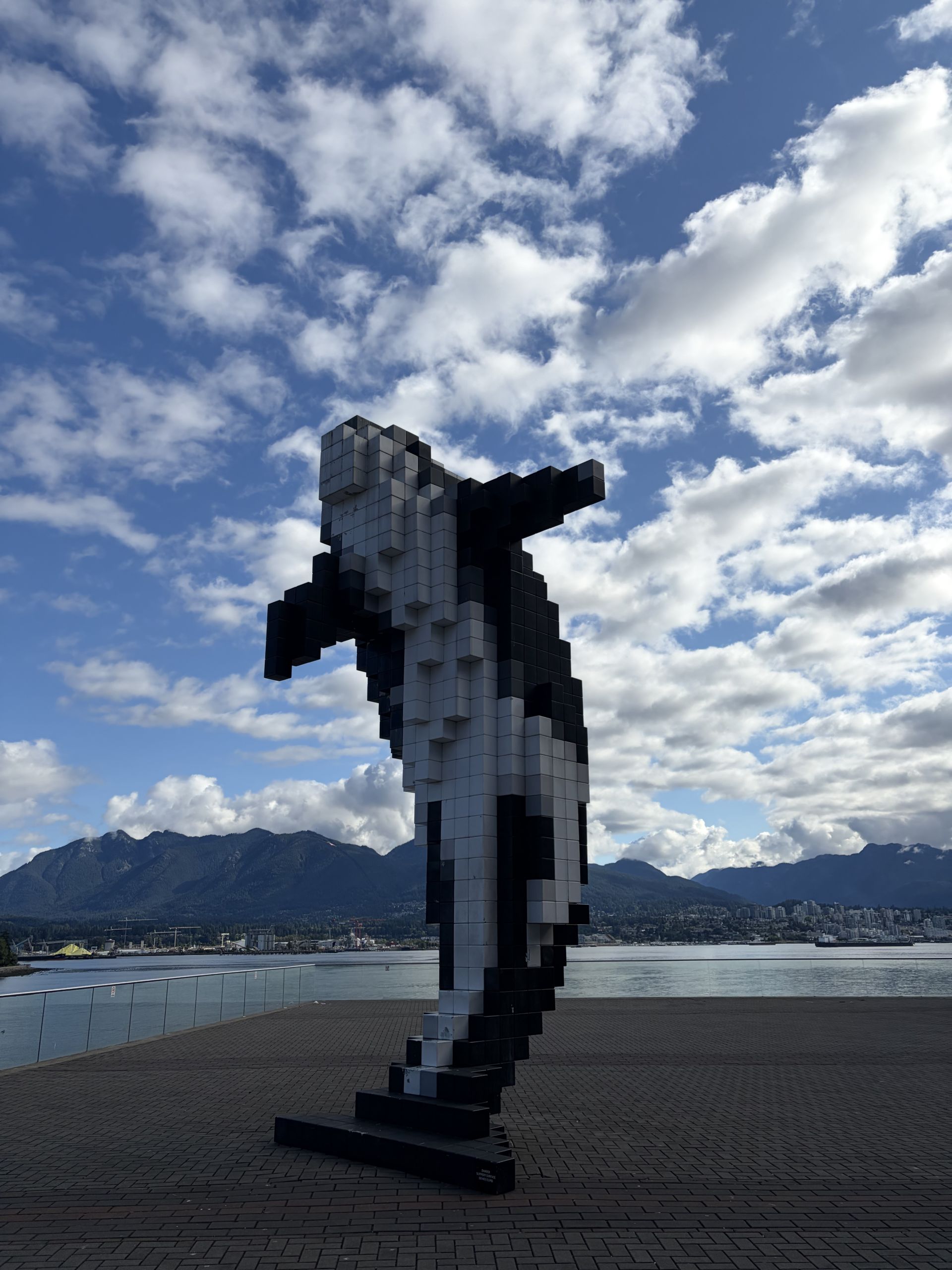
Vancouver made a memorable setting for it too. The congress centre sat right on the waterfront, with the mountains, trails and green space never feeling far away. With the World Cup also underway, there was an extra buzz around the city, and it felt like there was always a screen nearby showing the football.
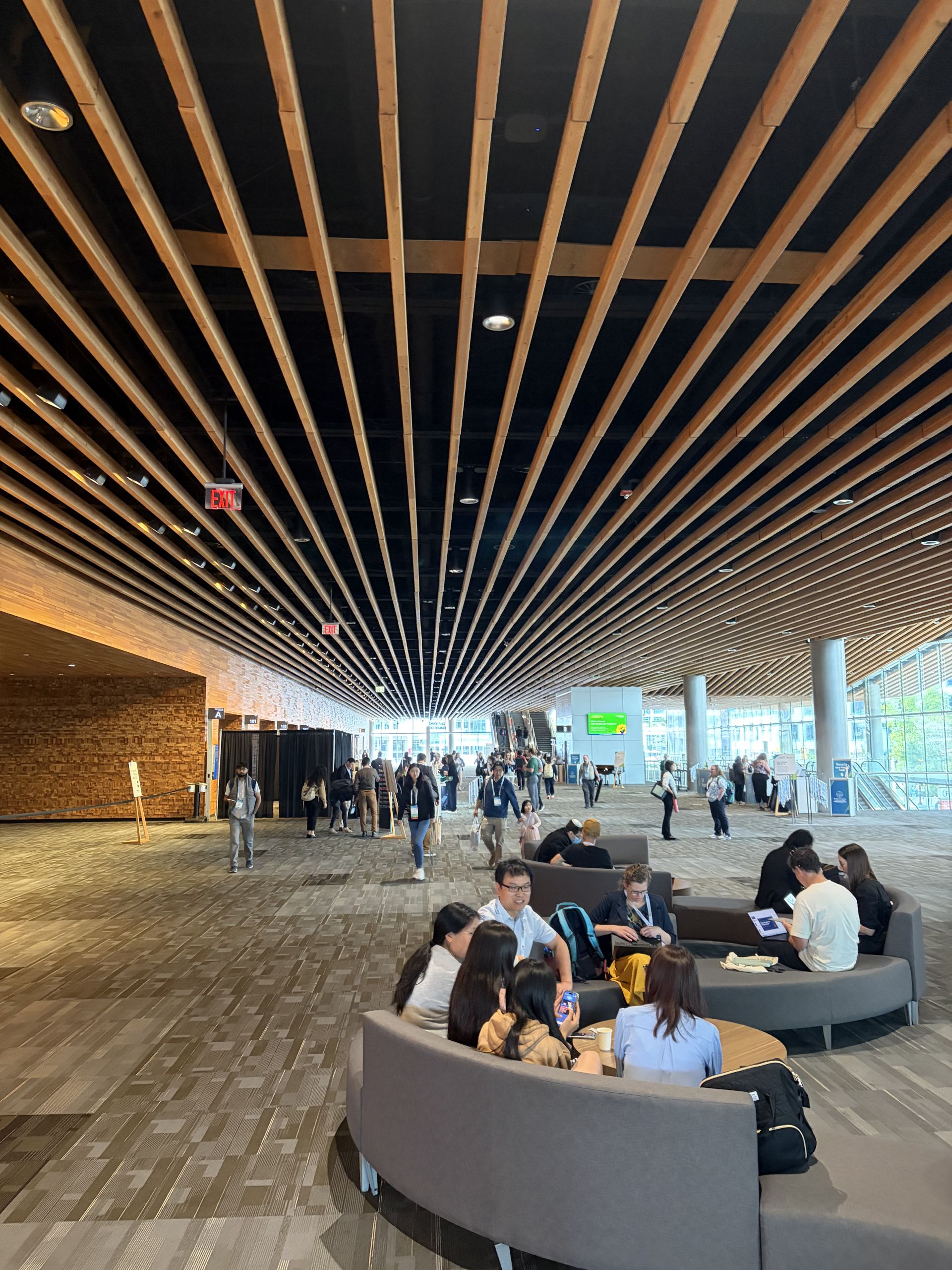
Inside, the breadth of biomechanics was just as captivating. We spent most of our time in the exhibition hall, where technologies ranged from motion capture and force measurement to robotics, tissue mechanics and EMG systems. There was also plenty of conversation around where biomechanics is heading next. Topics such as artificial intelligence and increasingly sophisticated approaches to analysing biomechanical and neuromuscular data featured regularly.
Inside, the breadth of biomechanics was just as captivating. We spent most of our time in the exhibition hall, where technologies ranged from motion capture and force measurement to robotics, tissue mechanics and EMG systems. There was also plenty of conversation around where biomechanics is heading next. Topics such as artificial intelligence and increasingly sophisticated approaches to analysing biomechanical and neuromuscular data featured regularly.
For MyoLearn, the timing felt particularly significant. After two years developing programmes, videos and interactive tools designed to make EMG easier to understand and apply, WCB was our first opportunity to introduce what we’d been building. We joined the De Luca Foundation (DLF) on their exhibition booth, reflecting the shared aim behind their support of MyoLearn: helping make high-quality EMG knowledge more accessible to a global community.
But some of the things that stayed with us most weren't necessarily about the newest technologyies. They came from the people learning, teaching, researching and using EMG.
But some of the things that stayed with us most weren't necessarily about the newest technologyies. They came from the people learning, teaching, researching and using EMG.
There is an appetite for different ways to learn EMG
One thing became clear fairly quickly: there is a real appetite for more visual, interactive and flexible ways to learn EMG.
Students and early-career researchers told us they wished resources like MyoLearn had been available when they were first learning the subject, while educators could see opportunities to complement traditional teaching with more interactive approaches.
One postdoctoral researcher particularly remembered relying on the SENIAM sensor placement guidelines during her undergraduate and master’s studies. When exploring MyoMap at the booth, she was struck by being able to visualise sensor placement alongside the anatomy beneath the skin, including muscle location, fibre orientation and relevant landmarks.
It reinforced something we had thought about throughout MyoLearn’s development: some aspects of EMG are easier to understand when they can be seen and explored, rather than simply read about. Interactive resources don’t replace textbooks, lectures or practical teaching. But for a subject that brings together physiology, anatomy, technology and practical application, they can provide another way of making those connections clearer.
Write your awesome label here.
Understanding the theory isn’t the same as applying it
That gap between EMG knowledge and application also came through clearly with master’s student Steve Wilson.
Steve already had experience with EMG through clinical gait work with paediatric patients and his master’s research in sports performance and gait analysis. Yet when we asked him about the most difficult parts of learning EMG, his answers centred on some very practical challenges: understanding anatomy and sensor placement, processing the signal, using filters and interpreting data.
When asked what might have made the learning process easier, he described wanting a clearer, more methodical approach alongside more practical experience and visual guidance: "Just more hands-on and visual resources to help me understand how to make it applicable for my research."
When asked what might have made the learning process easier, he described wanting a clearer, more methodical approach alongside more practical experience and visual guidance: "Just more hands-on and visual resources to help me understand how to make it applicable for my research."

Steve’s comments reflected something we heard in different forms throughout the week. Knowing about EMG and knowing how to use it are not necessarily the same thing. Learning the anatomy of a muscle is one thing; locating it confidently on an individual and positioning a sensor appropriately is another. Learning what a filter does is different from knowing which processing decisions are appropriate for a particular assessment. And understanding what EMG amplitude represents does not automatically tell you how to interpret a change in amplitude during a real assessment.
At some point, theoretical knowledge has to become practical decision-making. Helping learners make that transition remains an important part of EMG education.
At some point, theoretical knowledge has to become practical decision-making. Helping learners make that transition remains an important part of EMG education.
Making knowledge accessible matters
We explored that idea from a different perspective with Professor Walter Herzog from the University of Calgary.
We asked Walter what he thought needs to happen to make biomechanics knowledge more accessible. His response focussed on the importance of taking research beyond academic settings. He reflected that researchers should not only attend scientific conferences and communicate with their peers. Knowledge also needs to reach clinicians, patients, practitioners and the wider public, whether through education, public engagement, social media or speaking to non-specialised audiences.
Walter also spoke positively about a younger generation increasingly interested in the translational side of science: helping connect fundamental research with the people and settings in which that knowledge might eventually be used.
That idea resonated with us. Scientific progress depends on generating new knowledge, but its impact also depends on whether that knowledge can reach the people who might use it. Making science accessible doesn’t mean removing complexity or important nuance. It means finding better ways to communicate that complexity so people can understand how the evidence relates to them. For EMG, that feels particularly relevant. There is a huge amount of knowledge within the research literature. Translating that knowledge into something people can understand and confidently apply is another important step.
Hear more from Professor Walter Herzog
We asked Walter what he thought needs to happen to make biomechanics knowledge more accessible. His response focussed on the importance of taking research beyond academic settings. He reflected that researchers should not only attend scientific conferences and communicate with their peers. Knowledge also needs to reach clinicians, patients, practitioners and the wider public, whether through education, public engagement, social media or speaking to non-specialised audiences.
Walter also spoke positively about a younger generation increasingly interested in the translational side of science: helping connect fundamental research with the people and settings in which that knowledge might eventually be used.
That idea resonated with us. Scientific progress depends on generating new knowledge, but its impact also depends on whether that knowledge can reach the people who might use it. Making science accessible doesn’t mean removing complexity or important nuance. It means finding better ways to communicate that complexity so people can understand how the evidence relates to them. For EMG, that feels particularly relevant. There is a huge amount of knowledge within the research literature. Translating that knowledge into something people can understand and confidently apply is another important step.
Hear more from Professor Walter Herzog
At WCB 2026, we spoke to Professor Walter Herzog about why biomechanics research needs to reach beyond scientific conferences and how the next generation can help bridge the gap between research and practice.
Watch the interview below
Write your awesome label here.
A lot to take forward
New research. Different perspectives. Plenty of good conversations.
WCB brought together a broad academic and technical community, with researchers and engineers approaching biomechanics from many different perspectives. For MyoLearn, that was part of what made the congress so insightful. The research and technology being developed within academic environments underpin so much of what eventually becomes possible in applied settings.
Applied practice depends on good research, while researchers, educators and practitioners can each bring different perspectives to how knowledge is generated, taught and used.
That was perhaps one of the most useful things about WCB: hearing those perspectives all in one place. We went to Vancouver to introduce MyoLearn, but we also came away with a better understanding of the people who might use it, the challenges they encounter and the ways they want to learn. And, somewhere between conversations in the exhibition hall and getting outside to enjoy what Vancouver had to offer, there was space to step back and think about the bigger picture.
There’s still work to do between generating knowledge and making that knowledge usable. For EMG, that means supporting people not only to collect a signal, but to understand where it comes from, how their decisions influence it and what they can reasonably conclude from it. Helping to bridge that gap is a key part of what MyoLearn is trying to do.
One thing to take away
WCB showcased just how quickly biomechanics continues to evolve but one of our strongest reflections from Vancouver was not about a particular technology or research finding. It was about learning. From Steve’s experience of learning to apply EMG to Walter’s reflections on taking science beyond academic settings, the importance of understanding and translating knowledge kept resurfacing.
Better technology will continue to expand what we can measure. Better education will help us make sense of it. For us, both need to move forward together.
Keep exploring
If you’d like to explore some of these ideas further, MyoLearn offers a range of learning content, tools and resources designed to support both understanding and practical application of EMG.
Explore MyoLearn
Our learning pathways combine evidence-based EMG education with visual learning, practical examples and interactive resources designed to help turn theory into application.
Discover MyoMap
Explore muscle anatomy, fibre orientation and sensor placement interactively, helping connect what sits beneath the skin with what you record at the surface.
Explore MyoLearn
Our learning pathways combine evidence-based EMG education with visual learning, practical examples and interactive resources designed to help turn theory into application.
Discover MyoMap
Explore muscle anatomy, fibre orientation and sensor placement interactively, helping connect what sits beneath the skin with what you record at the surface.