
Nov 9
/
Amy Parkinson
Where does EMG fit in applied practice? Reflections from Sportsmith 2026
Two days of applied conversations
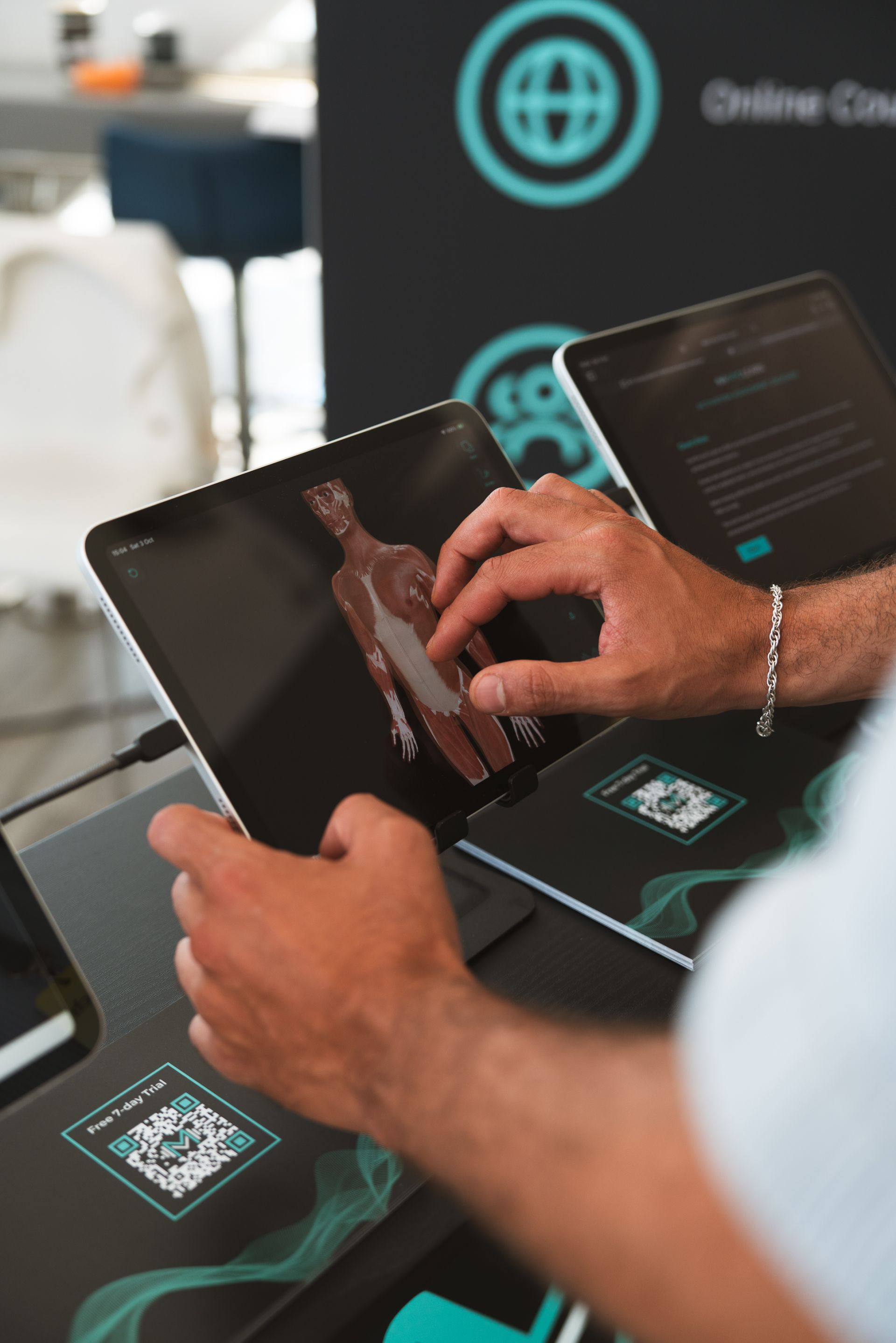
At the beginning of October, we headed to Manchester for two days focused firmly on applied practice. Our Sportsmith weekend began at UA92, where Delsys and VALD hosted a pre-conference workshop for students and practitioners. We introduced MyoLearn, demonstrated some of the learning content and tools we’ve been building, and talked about how people are learning and using EMG in practice.
The following day, those conversations continued at the Sportsmith Speed Conference at the Etihad Stadium, bringing together strength and conditioning coaches, physiotherapists, academics and others working across performance and rehabilitation. A few questions kept resurfacing. What could EMG add alongside the technologies practitioners already use? How do you turn the signal into useful information? What about normalisation? And do you need to own an EMG system before you can start learning? Together, those conversations made us think more carefully about where EMG currently sits in applied practice.
The following day, those conversations continued at the Sportsmith Speed Conference at the Etihad Stadium, bringing together strength and conditioning coaches, physiotherapists, academics and others working across performance and rehabilitation. A few questions kept resurfacing. What could EMG add alongside the technologies practitioners already use? How do you turn the signal into useful information? What about normalisation? And do you need to own an EMG system before you can start learning? Together, those conversations made us think more carefully about where EMG currently sits in applied practice.

From measurement to meaningful insight
Applied practitioners have access to more ways of measuring performance than ever, from force plates and motion capture to wearable sensors and other monitoring technologies. That felt relevant at Sportsmith. Force plates, movement analysis and other performance technologies were familiar parts of the conversation. But having access to more data does not automatically make that data useful.
The point isn’t that collecting more information is a problem. Additional data can be incredibly valuable when it helps answer a specific question or adds something that existing measures cannot provide. Without a clear question, another metric risks becoming just another number. With one, an additional measurement can provide another piece of the picture and support more informed decisions.
So the useful question isn’t simply “What else can we measure?” It’s “What are we trying to understand, and what information will help us understand it?” That is where the question of EMG becomes particularly interesting.
So where does EMG add something different?
Force plates, motion capture and EMG can all contribute useful information, but they answer different questions. Force plates tell us about forces involved in movement. Motion capture helps describe how someone moves. EMG adds information about the electrical activity associated with the muscles contributing to that movement. It is another piece of the picture rather than a replacement for existing measures.
Surface EMG already has an extensive research base in sport and exercise, including applications in muscle activity and coordination, fatigue, training adaptations, movement analysis and exercise selection (Alcan & Zinnuroğlu, 2023). Yet its place in applied environments sometimes seemed less clear. There was interest in what EMG could add, but also uncertainty around how to interpret the signal and use the information meaningfully. For some, the signal seemed difficult to make sense of. That gap between collecting EMG data and knowing how to use it effectively was something we heard repeatedly in our conversations.
So perhaps the question isn’t simply why aren’t more practitioners using EMG? It’s also: What needs to be in place for EMG data to become genuinely useful?
Good EMG starts with a clear aim
Modern systems can make collecting EMG increasingly straightforward. Making sure the data are meaningful is another matter. The signal we record, and the information we derive from it, are influenced by factors including anatomy, electrode placement, skin preparation, the task being performed and the way the signal is processed. Understanding these factors helps inform how an assessment should be designed. That complexity came through in the questions we heard at Sportsmith: Which amplitude metric should I use? Do I need to normalise? What aspects of the movement should I control? The answer depends on what the assessment is trying to achieve. Are you trying to identify whether a muscle is active, quantify its activation, or make a comparison between tasks, muscles or people?
A clear assessment aim helps guide the methodological decisions that follow. Understanding how to make those decisions is an important part of using EMG well.
A clear assessment aim helps guide the methodological decisions that follow. Understanding how to make those decisions is an important part of using EMG well.
Education can come before equipment
We also spoke with practitioners who were interested in EMG but didn’t yet have access to a system. Some were considering how their performance environments or laboratories might develop, and where EMG could add value. But learning doesn’t have to begin with the equipment. Understanding what EMG measures, what influences the signal, what questions it can help investigate, and where its limitations lie can all come first. That knowledge can help practitioners make more informed decisions about where EMG might fit within their existing approach.
We heard something similar from undergraduate students. Some were already in their second year of university but hadn’t yet had any practical exposure to EMG and were unsure how much would be covered later in their degree, particularly where access to a system was limited. But the fundamentals don’t require the hardware. Students can begin building an understanding of the signal and its applications before practical experience builds on those foundations.
Academics we spoke with also saw potential for structured digital learning at different stages of a degree, from introducing the fundamentals through to experimental design, processing and interpretation. Practical experience remains important, but access to equipment does not need to determine when learning begins.
Academics we spoke with also saw potential for structured digital learning at different stages of a degree, from introducing the fundamentals through to experimental design, processing and interpretation. Practical experience remains important, but access to equipment does not need to determine when learning begins.
If the technology scales, education has to scale with it
The same issue appeared from an industry perspective. In-person training can work extremely well at a smaller scale, but as EMG reaches more clinics, teams and practitioners, providing the same level of expert education becomes harder.
If access to EMG technology grows, how does access to the knowledge needed to use it well grow alongside it?
Structured digital education can provide a consistent foundation alongside practical training, as well as something users can return to as their questions become more sophisticated. This is also reflected in the research. In their 2023 review of developments in surface EMG, Alcan and Zinnuroğlu highlight the need for continuing education alongside advances in EMG techniques and devices. As technology becomes easier to access, understanding becomes more important, not less.
One thing to take away
Sportsmith reinforced something simple for us: different technologies answer different questions. Force plates, motion capture and wearable sensors can provide valuable information about force and movement. EMG adds another layer by providing information about the electrical activity associated with the muscles contributing to that movement. But the value of EMG comes from more than collecting the signal. It starts with a clear assessment aim, an understanding of what the technology can tell us, and knowing how to use the information meaningfully. And importantly, that understanding can begin before access to the equipment does. The equipment records the signal. The value comes from knowing what to do with it.
Keep exploring
If you’d like to explore where EMG could fit within your own practice, MyoLearn brings together structured learning, practical tools and evidence-based resources to help you build your understanding.
Explore Learn EMG
Build the foundations of surface EMG, from the physiological, anatomical and biomechanical factors that influence the signal through to recording, processing and analysis.
Explore MyoTools
Use practical tools designed to support EMG assessment planning and decision-making, including defining your assessment aim, considering biomechanical controls and planning how your data will be compared.
Explore MyoLibrary
Explore EMG research and AI-generated briefs designed to make it easier to connect the evidence with questions you encounter in practice.
References
Alcan V, Zinnuroğlu M. Current developments in surface electromyography. Turkish Journal of Medical Sciences. 2023;53:1019–1031.
Evidence-based education and interactive resources for understanding and applying surface EMG.
Copyright © 2026
MYOLEARN
FREE 7-DAY TRIAL
Ready to explore MyoLearn?
Discover how MyoLearn can help you build confidence in surface EMG with evidence-based, expert-led education.
-
Explore selected EMG classes
-
Discover interactive learning tools
-
Connect with other learners
No payment details required. No commitment.