If you've ever looked at EMG data, you've probably been presented with the amplitude of the signal. You may even have spotted changes in amplitude from one moment to the next. And in that situation, it's possible you found yourself asking: “does a larger amplitude mean the muscle is working harder?”
It's an understandable assumption. During EMG assessments, amplitude is the obvious thing to focus on: it's visible, intuitive, and easy to compare between conditions. And often, larger amplitudes do mean a muscle is working harder or producing more force*. But not always. Get this wrong and you may mislead your practice.
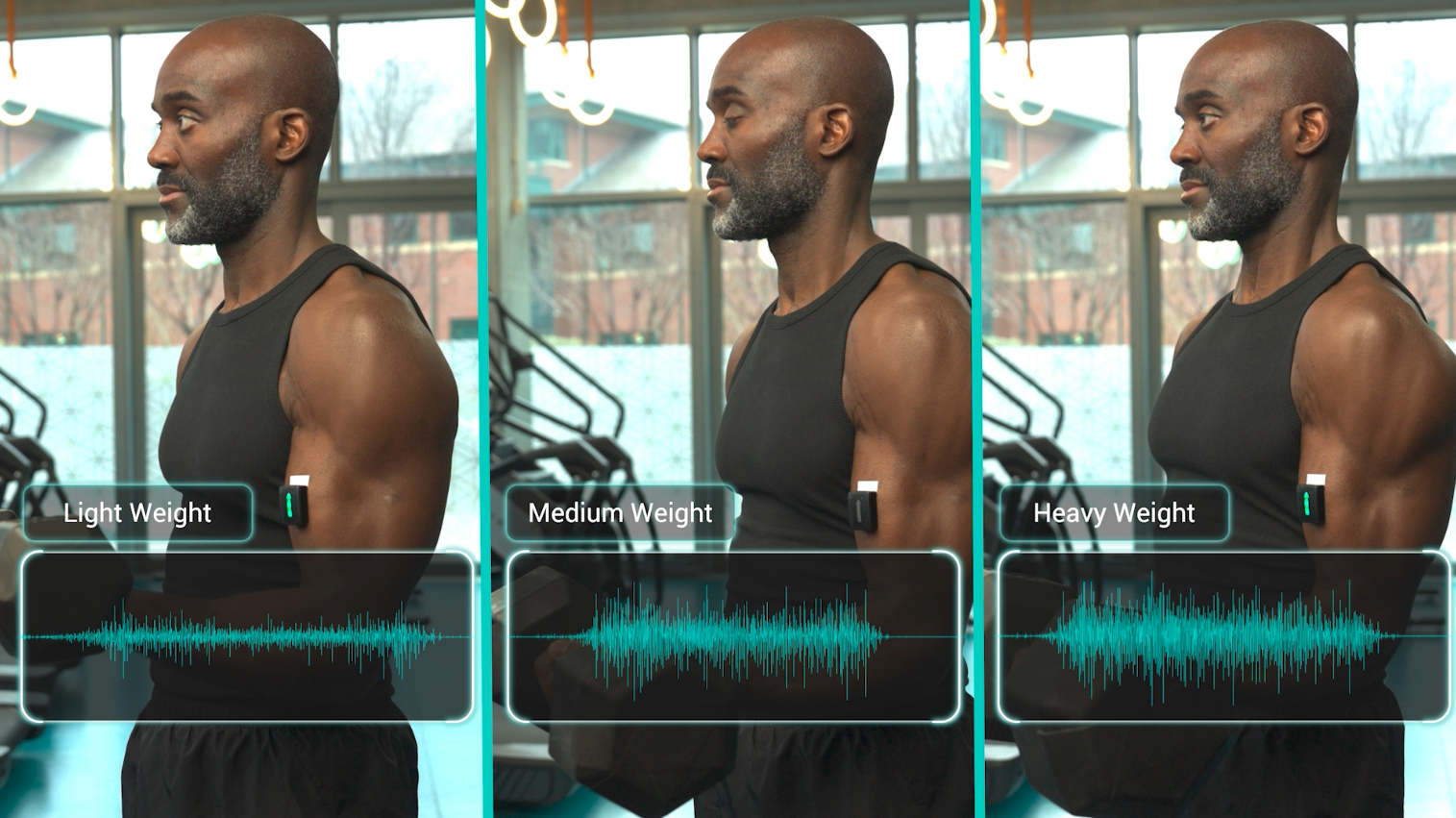
In many situations, increases in muscle force are accompanied by increases in EMG amplitude. Figure 1 illustrates this well: amplitude is noticeably larger when a person holds a heavy dumbbell compared to a lighter one. This reflects something known as the EMG – force relationship, a well-studied phenomenon observed across many muscles and tasks.

But there are important conditions. For a true EMG – force relationship to be measured, the task needs to be tightly controlled: force must be the only variable that changes. Factors like sensor location on the skin, joint position, and contraction type (to name just a few) all need to stay constant. And even then, the relationship measured at one muscle will differ to that measured at another.
These conditions are routinely overlooked. Over time, this has led to a widespread assumption that changes in EMG amplitude ‘always’ reflect changes in muscle force production. That message has spread through research, education, and clinical practice alike.
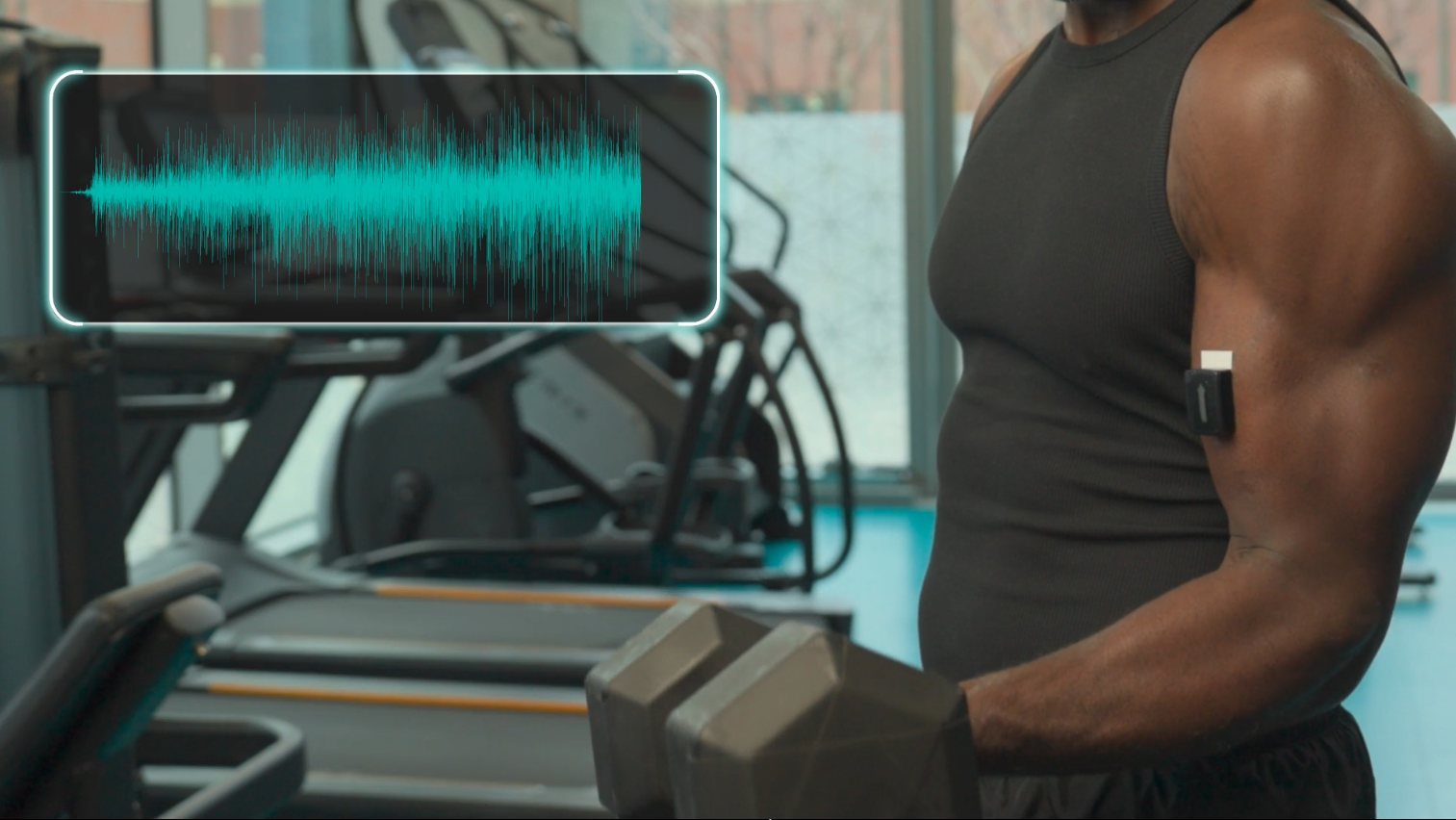
Consider what happens when someone holds a moderately heavy dumbbell for a sustained period (Figure 2). EMG amplitude increases throughout, even though the dumbbell hasn’t changed and therefore, neither has the force required to hold it.

This is caused by fatigue. As the muscle tires it becomes difficult to maintain the same force output. To compensate, the nervous system increases activation of the muscle to help sustain the task. More motor units become active, and EMG amplitude increases as a result. If you weren't expecting this, the rising amplitude might look like evidence of increased force production. But it isn't, force has stayed the same. What has changed is the amount of activation required to maintain it.
Fatigue provides just one example of the EMG – force relationship being disrupted, but it’s far from the full picture. There are many factors that can change EMG amplitude, independently of force production, and understanding these factors is essential for meaningful interpretation.
The important point is that EMG amplitude does not directly measure force. It reflects the electrical activity associated with muscle activation, and that activity can be influenced by multiple factors.
None of this makes EMG amplitude unreliable for practical assessments. If anything, it's part of what makes EMG so valuable. The key is knowing which factors you can vary during the assessment and which ones to keep constant. When you control the right things, amplitude becomes a meaningful signal. When you don't, your data can mislead you.
A good assessment starts with a clear goal: a specific question you want answered. That question then determines how you design the assessment and what you need to control. That process is more structured than it might first appear, and more important than many practitioners realise.
Our Understanding EMG programme explores the physiological, anatomical, and biomechanical factors that influence EMG amplitude in much greater depth. In addition, our upcoming Activation module introduces a framework for designing effective EMG assessments that answer meaningful questions in practice.
Together, these modules provide the foundations needed to design, conduct, and interpret EMG assessments with confidence.
*The term ‘working harder’ in this post is not scientifically accurate. It’s used as a more relatable phrase for ‘producing more force’. Technically, a muscle is only ‘working’ if it changes length whilst producing force. Sometimes in movement, muscles contract isometrically, producing force without changing length.